
A real estate transaction rarely closes on the first conversation. A broker tracking a lease negotiation, a property manager renewing a tenant relationship, or an agent nurturing a buyer lead over months all depend on the same underlying capability: a system that remembers every interaction, surfaces the right follow-up at the right moment, and doesn’t let a deal quietly go cold because nobody flagged it. That’s the actual job of real estate CRM software, and it’s a meaningfully different job than a generic sales CRM was built to do, because real estate relationships run longer, involve more parties, and depend on property-specific data a standard CRM was never designed to track.
This is a look at what a real estate CRM actually needs to handle well — deal pipeline management, lease and tenant tracking, and the integrations that keep a broker or property manager from re-entering the same information across five different tools.
The Deal Pipeline Is the Core of the System
At the center of any real estate CRM is the ability to track a deal from first interaction through to closure, with a visual pipeline that shows exactly where every active deal stands without requiring a broker to dig through email threads to reconstruct the status. A genuinely useful pipeline view goes beyond a simple stage label — it needs meeting scheduling, task tracking against real deadlines, and alerts that surface automatically rather than depending on a broker remembering to check in. For a broker juggling dozens of active relationships simultaneously, the CRM’s job is essentially to be the memory the human brain can’t reliably hold on its own across that many parallel conversations.
Commission tracking sits close to the pipeline for a reason: a real estate CRM that can calculate payouts automatically based on deal value and each agent’s commission structure removes a recurring administrative burden that otherwise falls on someone manually reconciling closed deals against payment records every pay cycle. This is a detail that rarely shows up in a feature comparison at a glance, but it’s one of the more consistently valuable time-savings a good real estate CRM delivers once a firm has more than a handful of active agents.
Property and Lease Data Belong Inside the CRM, Not Beside It
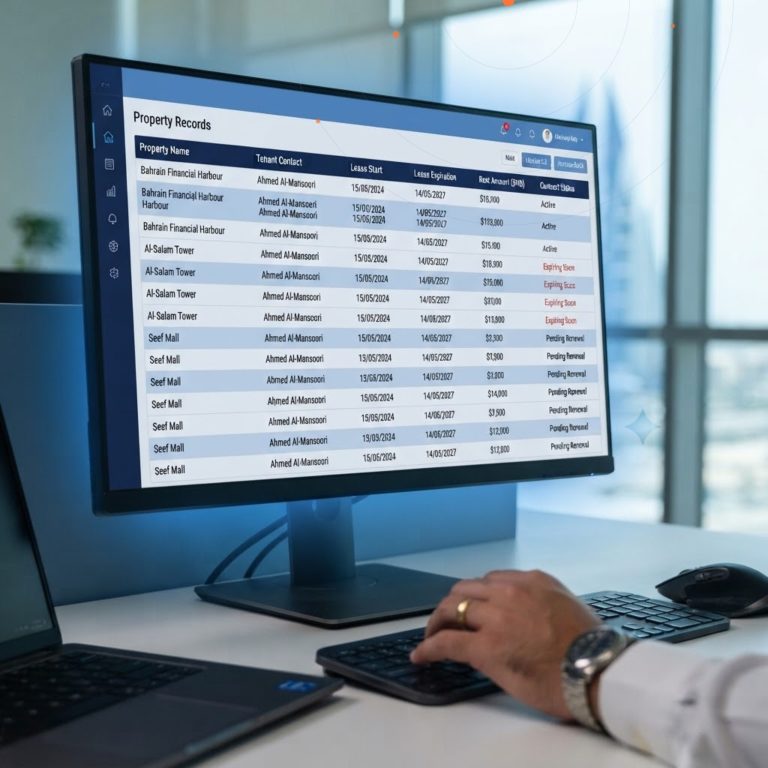
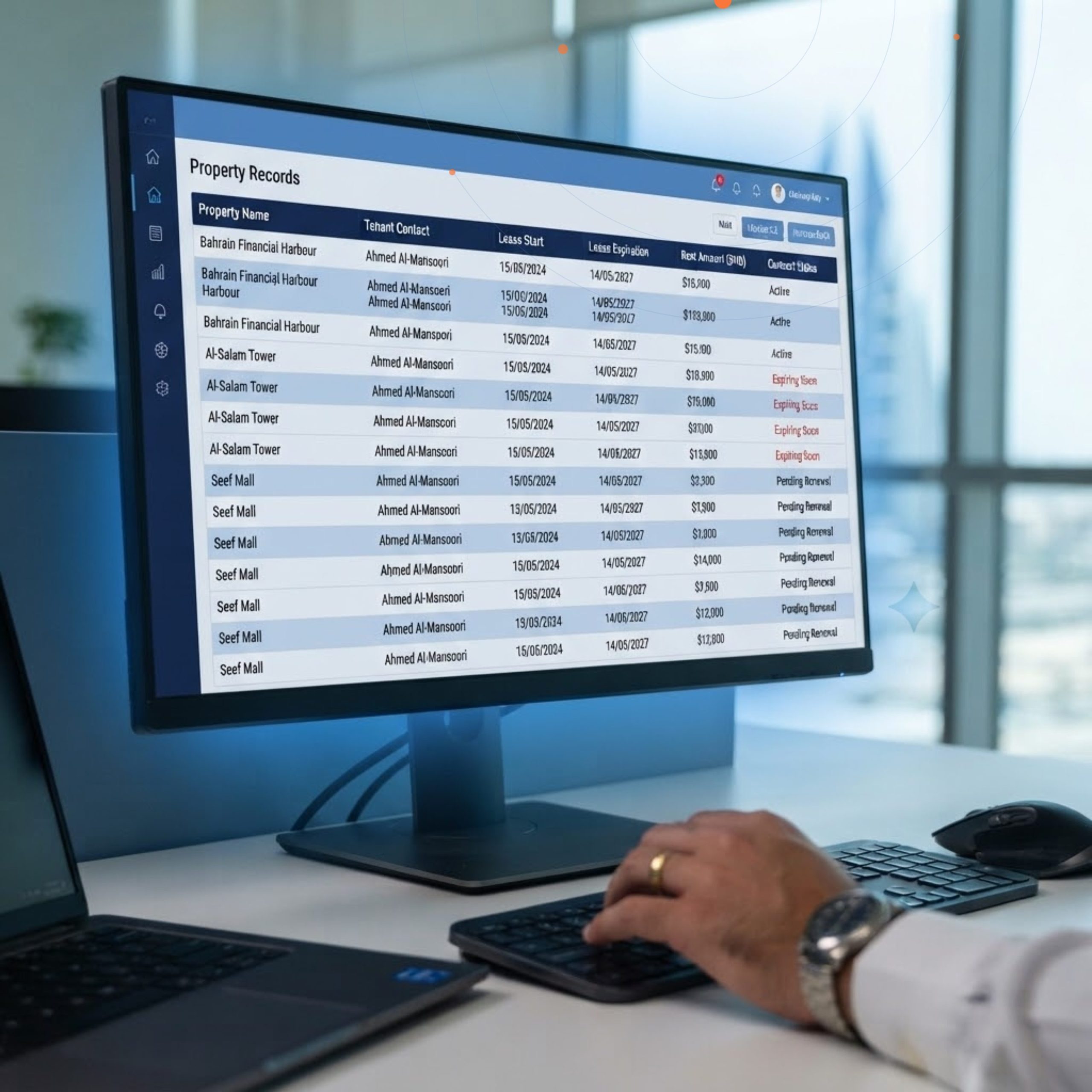
What separates a real estate CRM from a generic sales tool is the property-specific data layer sitting underneath the relationship tracking: comprehensive records of expiring leases, sales transaction history, current listing status, and contract state across every stage from active to pending to sold, rented, withdrawn, terminated, or expired. Keeping this data inside the CRM rather than in a separate property management spreadsheet means a broker following up on a lease renewal automatically has the lease’s actual expiration date and terms in front of them during the conversation, rather than needing to cross-reference a different system mid-call.
Tenant relationship management deserves particular attention for firms managing leased commercial or residential property, since tenant retention depends heavily on proactively monitoring lease expiration dates and reaching out well before a renewal deadline rather than reactively scrambling once a tenant has already started looking elsewhere. A CRM that surfaces upcoming lease expirations automatically, rather than requiring someone to manually track a separate renewal calendar, converts tenant retention from a reactive scramble into a manageable, scheduled workflow.
Contract Automation Removes a Genuine Bottleneck
Document and contract handling is one of the most time-consuming parts of any real estate transaction, and a CRM with built-in contract automation — generating documents from templates, supporting e-signatures on contracts and NDAs, and providing a secure shared workspace for document collaboration between parties — removes a bottleneck that otherwise slows every deal down at exactly the stage where momentum matters most. A deal that stalls waiting for a document to be manually drafted, printed, signed, and re-uploaded is a deal at real risk of losing urgency, and contract automation is one of the more concretely measurable ways a real estate CRM speeds up actual closings rather than just organizing information more neatly.
Integration Depth Determines Whether Data Gets Re-Entered
A real estate CRM that doesn’t connect cleanly to the tools a firm already uses for email, calendaring, document management, and video calls creates exactly the kind of duplicate data entry the CRM was supposed to eliminate. Quality real estate CRM platforms integrate with common tools like Outlook, Gmail, Zoom, and Microsoft Teams, along with document and e-signature platforms, so a broker’s calendar, inbox, and contract workflow all stay synchronized with the CRM automatically rather than requiring manual updates in multiple places after every call or meeting.
Lead Source Tracking Tells You Where to Actually Invest
Beyond managing active deals, a real estate CRM’s lead tracking and analytics layer answers a question every brokerage and marketing team needs a real answer to: which channels are actually producing closed deals, not just inquiries. Tracking a lead’s full journey from initial source — a listing portal, a referral, a marketing campaign, a walk-in — through to closed deal or lost opportunity lets a firm see conversion rates by source rather than guessing based on raw inquiry volume, which is frequently misleading since some channels generate high volume but low-quality leads that rarely close. Without this level of tracking built into the CRM, marketing spend decisions end up based on impressions and clicks rather than actual revenue outcomes, which is precisely the gap a real estate CRM’s analytics layer is meant to close.
Reporting built on top of this data should give brokerage leadership visibility into agent-level performance and pipeline health without requiring a manual roll-up from individual agent notes — average time to close, pipeline value by stage, and lead source conversion rates are the kind of metrics that should be a standard dashboard view, not a special report someone has to build by hand once a quarter.
The Category’s Growth Reflects a Broader Shift Toward Centralized Data
The real estate CRM software market continues expanding as more brokerages and property managers move away from fragmented spreadsheets and disconnected tools toward centralized platforms: the global market is projected to grow from roughly $5.31 billion in 2026 to $14.98 billion by 2035, a 12.2% compound annual growth rate, nearly tripling over the forecast period as cloud-based CRM adoption accelerates across the industry. That growth reflects the same underlying shift covered throughout this section — real estate professionals increasingly expect one system to hold the full relationship and transaction history, rather than piecing that picture together from email, spreadsheets, and memory.
Matching the CRM to the Actual Scale of the Operation
Not every real estate CRM suits every firm size, and evaluating a platform against the actual scale of an operation matters as much as evaluating its feature list. A CRM built and priced for a small independent brokerage handling a handful of active listings will often lack the deal-volume handling and reporting depth a firm managing a hundred-plus unit portfolio needs, while an enterprise-grade platform can be needlessly complex and expensive for a small team just getting a pipeline organized for the first time. Matching platform scale to actual portfolio and deal volume, rather than defaulting to whichever CRM is most heavily marketed, avoids both underpowering the workflow and overpaying for capacity that goes unused.
Beyond scale, a practical evaluation should weigh whether the platform was purpose-built for real estate or adapted from a general sales CRM, pricing transparency and whether a genuine free trial is available before committing, the responsiveness of customer support, and mobile device compatibility given how much of the work happens away from a desk. Identifying the specific features a team actually needs — rather than assuming one universal “best” CRM exists across every brokerage type and portfolio size — is a more reliable filter than any generic top-ten list, since a platform ranked highly for residential agents may be poorly suited to a commercial brokerage managing a very different kind of deal.
Choosing Real Estate CRM Software for a GCC-Based Firm
For real estate brokerages and property managers in Bahrain and the wider GCC, confirm a CRM’s document and e-signature workflows are actually compliant with regional legal requirements for lease and sale contracts, since a platform built primarily around US or European document standards may not map cleanly onto local requirements without additional configuration. Mobile access deserves particular weight in this market too, given how much broker and property manager activity happens on-site at properties rather than at a desk — a CRM that works smoothly on a phone in the field is materially more useful day to day than one that only performs well on a desktop browser.
Building a CRM That Actually Fits the Deal
Global ITS works with real estate brokerages and property managers across Bahrain and the GCC to implement CRM systems built around the full deal and tenant lifecycle — not just a contact list with a pipeline stage attached. Contact our team to talk through your current CRM setup, or request a live demo to see it handle a real deal cycle.