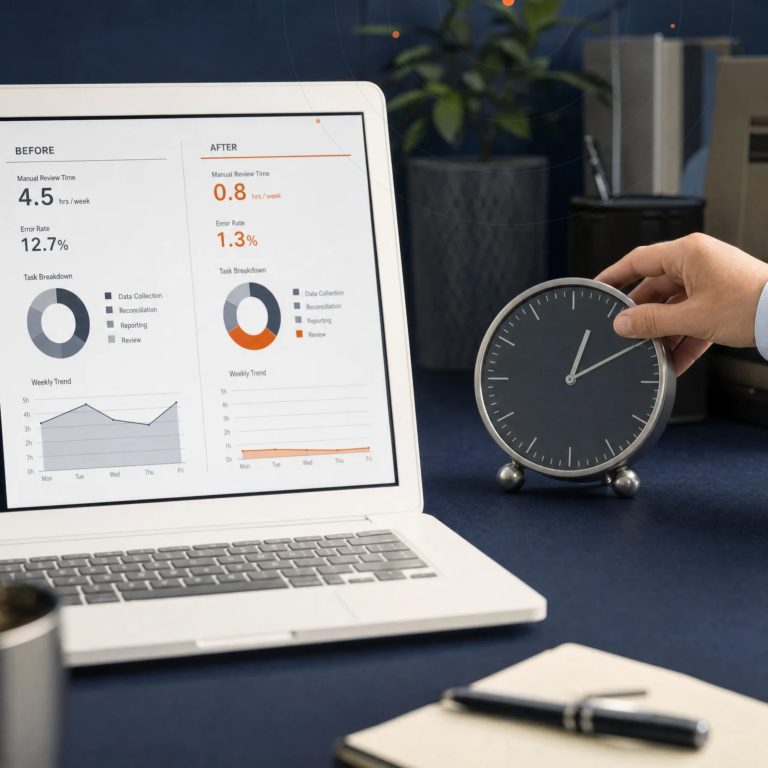


A fund’s quarterly close shouldn’t take three weeks. But at many GCC asset managers, it still does — because NAV calculations, capital call notices, investor allocations, and LP reporting are running across a mix of spreadsheets, email threads, and a fund accounting tool that only talks to the rest of the business through manual exports.
Fund management software and investment fund management software exist to close that gap. Unlike a general portfolio tracker, fund management software is built around the specific operational cycle of running a fund: capital commitments, calls and distributions, NAV and performance calculations, investor communications, and the compliance trail that has to hold up to audit and regulator scrutiny.
For GCC fund managers, family offices, and fund administrators managing increasingly complex structures — often across multiple jurisdictions and currencies — the right platform isn’t a nice-to-have. It’s what determines whether quarter-end close takes three days or three weeks.
The Fund Manager’s Operational Reality
Fund management is fundamentally different from managing a single portfolio. A fund manager isn’t just tracking positions — they’re managing obligations to investors, a fund structure with its own legal and accounting requirements, and a reporting cycle that has to satisfy LPs, auditors, and regulators simultaneously.
That operational cycle typically includes:
- Capital activity — calls, contributions, distributions, and redemptions, each tracked against individual investor commitments
- NAV and performance calculations — often across multiple currencies, fee structures, and share classes within the same fund
- Investor allocations — profit and loss, fees, and carried interest allocated correctly across every investor in the fund
- LP reporting and communications — capital account statements, quarterly reports, and ad hoc investor requests
- Regulatory and audit compliance — a defensible, traceable record of every calculation and transaction
When these functions live in separate spreadsheets or disconnected tools, the fund’s operations team spends the bulk of every reporting cycle reconciling numbers between systems rather than reviewing them for accuracy. That’s not just inefficient — it’s where errors creep into investor-facing numbers.
Fund Accounting vs. Fund Management Software: Know the Difference
This distinction matters when evaluating vendors, because the two categories are often marketed as if they’re interchangeable.
Fund accounting software focuses specifically on the books: NAV calculations, the general ledger, multi-currency processing, and the accounting-grade record that has to withstand an audit.
Fund management software typically extends further — bringing investor accounting, capital call administration, LP communications, and reporting workflows into the same platform as the accounting engine.
Some platforms bundle both into a single system. Others expect firms to run a fund accounting engine alongside a separate investor relations or CRM layer. See this best fund management software comparison for how platforms differ on this exact split.
This isn’t just a semantic distinction. A firm that buys a strong fund accounting engine expecting it to also handle capital call administration and LP communications will often find those workflows still happening manually, outside the system it just invested in. Conversely, a firm that buys a full fund management suite when all it needed was a more disciplined general ledger may end up paying for capabilities its team never uses. Getting clear on which category you actually need before the vendor conversations start saves months of scope creep during implementation.
Core Capabilities That Actually Matter
Multi-currency, multi-book accounting. GCC funds frequently hold assets and report to investors across more than one currency. The platform needs to handle this natively — not through a manual conversion step bolted onto a single-currency ledger.
Capital call and distribution management. The system should track commitments, calls, and distributions against each investor automatically, with the calculations and notices generated directly from the same data used for the fund’s books — not recreated separately in a spreadsheet template.
Investor allocations and waterfall calculations. Profit and loss, fees, and any carried interest or waterfall structure need to calculate correctly and consistently across every investor, every time — this is one of the areas most prone to manual error when handled outside the core system.
Investor portal and reporting. LPs increasingly expect self-service access to their capital account statements and fund performance, not a quarterly PDF emailed after a multi-day production process. For fund administrators managing multiple funds and investor bases at once, the difference between a system that generates investor statements automatically from live data and one that requires a manual production run every quarter is the difference between a reporting cycle measured in hours and one measured in weeks.
Audit trail and compliance workflows. Every transaction and calculation should be traceable, with AML/KYC status and regulatory filing requirements tracked as part of the same operational record — not a separate compliance spreadsheet maintained in parallel.
Integration with the firm’s broader technology stack. A fund management platform that can’t connect cleanly to the firm’s core ERP, CRM, or treasury systems creates a new silo instead of eliminating the old ones. This is especially relevant for firms already standardized on Microsoft Dynamics 365, including fund accounting software built on Microsoft architecture, and the broader 2026 Best Microsoft Dynamics ERP Tools for Financial Management list.
Where GCC Fund Managers Get This Wrong
Choosing a system built for a different fund structure. A platform built primarily for private equity waterfall structures may be a poor fit for a firm running open-ended funds with daily NAV requirements, and vice versa. Fit to your actual fund structures matters more than a vendor’s overall market reputation.
Underestimating the investor relations side. Firms often over-index on the accounting engine and under-invest in how LP communications and reporting actually get produced — leaving that part of the process manual even after the accounting side has been modernized.
Treating integration as an afterthought. Fund management software rarely operates in isolation. If it can’t connect to core banking, CRM, or ERP systems already in place, the firm ends up automating one part of the workflow while leaving the handoffs between systems just as manual as before.
Skipping a real data migration plan. Moving historical capital account and transaction data into a new system is one of the highest-risk parts of any fund management software implementation. Firms that treat this as a technical afterthought rather than a planned workstream often end up with reconciliation issues that surface months after go-live.
How Microsoft Dynamics 365 Supports Fund Managers
For GCC firms already operating on the Microsoft ecosystem, Dynamics 365 offers a foundation purpose-built for bringing fund operations into the same environment as the rest of the business. A Dynamics 365 solution for investment management brings deal, fund, account, and KYC data together in one place, giving fund managers full visibility across leads, opportunities, and fund fulfillment.
Within that structure, funds can store the fund fulfilment data relevant to term, return percentage, and first and final close dates, alongside a breakdown of the deals contributing to that fund. That means the fundraising and deal pipeline data that shapes a fund’s formation lives in the same system that will later support its ongoing investor reporting, rather than in a separate CRM that has to be reconciled against the accounting platform after the fact.
KYC management within Dynamics 365 tracks the status, validity, and results of KYC checks directly against investor records. — Cloud9 Insight, 2026
That’s a meaningful advantage for GCC fund managers navigating increasingly rigorous AML and investor-onboarding requirements across multiple jurisdictions. For firms running fund accounting on a Microsoft-based architecture, this also means the accounting engine, investor relations data, and broader ERP environment can share a common data foundation rather than existing as disconnected systems that require manual reconciliation between fund administration and the rest of the business.
Choosing the Right Platform
The right fund management software decision starts with an honest map of your current operational cycle: where does quarter-end close actually slow down, where do LP reporting requests take longer than they should, and where does investor data live in a system that doesn’t talk to your core accounting platform.
That gap — more than any vendor’s feature list — should drive the shortlist. A platform that closes those specific gaps for your fund structure, currency exposure, and investor base will deliver more value than the most feature-complete system on the market that doesn’t fit how your firm actually operates.
It’s also worth building the evaluation around your actual fund lifecycle rather than a generic checklist. Walk a single fund through its full cycle — capital calls, NAV calculations, investor reporting, and eventual distributions — and note where the process currently breaks down. Vendors should speak concretely to how their platform handles each stage for a fund structure like yours, not just describe features in the abstract.
Global iTS works with GCC fund managers and fund administrators to evaluate and implement Microsoft Dynamics 365-based fund management solutions built around each firm’s actual fund structures, investor base, and existing technology environment.