

The pace of modern business is no longer set by those who work hardest, but by those who adapt fastest. For decades, enterprise innovation was bottlenecked by “The Gap”—the distance between a brilliant business idea and the technical capacity of the IT department to build it. Traditional development cycles are often too slow, and specialized talent is increasingly scarce.
However, a paradigm shift is occurring. By combining the power of Artificial Intelligence (AI) with Low-Code development, organizations are finally closing that gap. The Microsoft platform, specifically through Microsoft Azure and the Power Platform, has emerged as the premier ecosystem for this evolution. This article explores how the synergy of AI and low-code is not just an incremental improvement, but a fundamental reimagining of how enterprise value is created.
The Convergence of AI and Low-Code: A New Era of Productivity
For years, low-code was viewed primarily as a tool for simple internal forms or “citizen developers.” That perception is now obsolete. Today, low-code is a strategic enterprise asset. When you infuse these platforms with Generative AI, you move from “drag-and-drop” to “natural language development.”
Empowering the Citizen Developer with Copilot
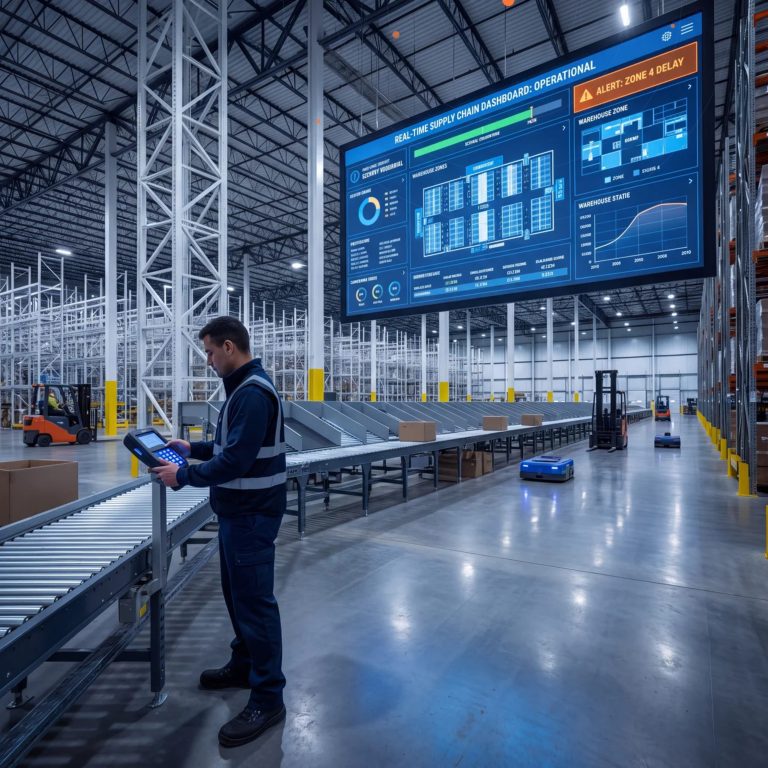
Microsoft Copilot has revolutionized how users interact with the Power Platform. Instead of mastering complex expressions, users can describe their intent in plain English. For example, a logistics manager can simply type, “Create an app to track warehouse inventory and alert me when stock drops below 10%,” and the platform generates the data schema, UI, and logic automatically.
Bridging the Professional Developer Gap
Professional developers are using these tools to handle the “commodity code,” allowing them to focus on complex architecture and custom integrations. By utilizing Azure OpenAI Service, developers can embed sophisticated LLMs (Large Language Models) directly into low-code applications, bringing enterprise-grade intelligence to every corner of the business.
Accelerating Business Process Automation
Automation is the heartbeat of the modern enterprise. However, legacy automation was often brittle. If a UI element changed, the bot broke. Microsoft’s approach to Business Process Automation (BPA) through Power Automate and AI Builder is different.
Intelligent Document Processing
One of the most immediate ROIs for Microsoft customers is Intelligent Document Processing (IDP). By using AI Builder, companies can automate the extraction of data from invoices, receipts, and legal contracts with staggering accuracy. This eliminates manual data entry and allows teams to focus on high-value analysis rather than clerical tasks.
Predictive Insights and Action
Beyond simple “if-this-then-that” logic, AI-driven automation allows for predictive workflows. By analyzing historical data stored in Microsoft Dataverse, the system can predict customer churn or equipment failure and trigger an automated response—such as a retention discount or a maintenance work order—before the problem even occurs.
Building a Data-Driven Foundation with Microsoft Dataverse
AI is only as good as the data that fuels it. One of the greatest challenges in digital transformation is data fragmentation. If your AI doesn’t have access to a clean, unified data source, its output will be unreliable.
The Role of Dataverse in AI Strategy
Microsoft Dataverse acts as the secure, scalable data backbone for the entire Microsoft ecosystem. It doesn’t just store data; it applies business logic, security protocols, and integration capabilities. When you build low-code apps on Dataverse, your AI models have a holistic view of the enterprise, ensuring that insights are grounded in reality.
Governance and Security in the AI Era
As AI becomes more prevalent, governance is non-negotiable. The Microsoft platform provides a “Center of Excellence” (CoE) framework that allows IT departments to maintain oversight. You can empower your workforce to innovate with AI while ensuring that data stays within the corporate boundary, complying with global standards like GDPR and HIPAA.
The Strategic Advantage of a Unified Cloud
Many organizations struggle with “Frankenstein’s Monster” architectures—pieces of software from a dozen different vendors that don’t talk to each other. The true power of innovation today lies in the Microsoft Cloud.
Seamless Integration Across Ecosystems
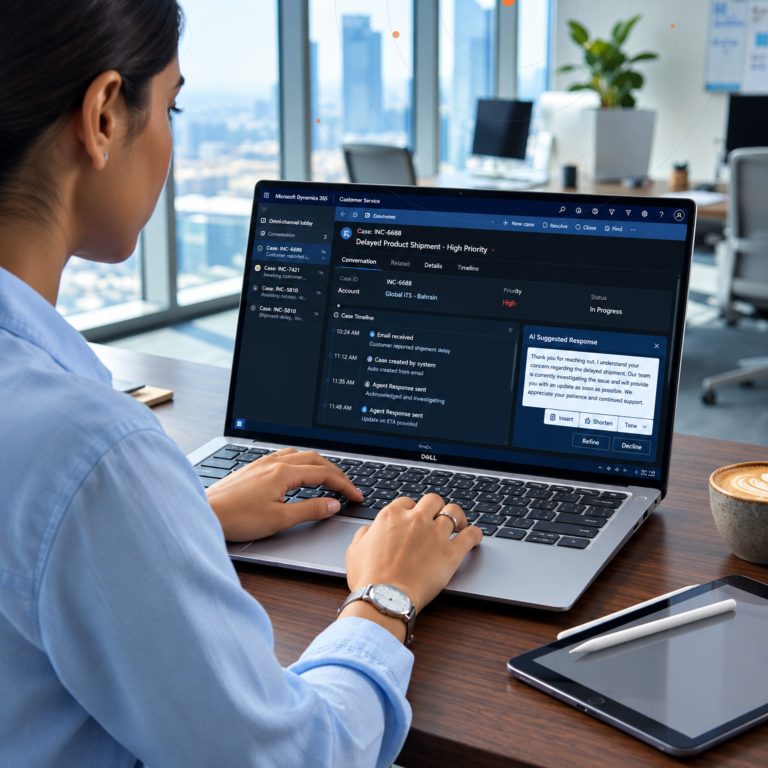
The integration between Microsoft 365, Dynamics 365, and Azure creates a frictionless environment. An insight generated in Dynamics 365 Sales can trigger an automated workflow in Power Automate, which then updates a dashboard in Power BI and notifies a team in Microsoft Teams. This interconnectedness is where true agility is found.
Scaling Innovation with Azure AI
For organizations with highly specialized needs, Azure AI services offer the ability to build custom machine learning models. These models can then be surfaced through low-code interfaces, making the most advanced data science accessible to every department in the company.
Maximizing ROI: Why the Microsoft Platform Wins
Investing in technology is only half the battle; the goal is maximizing ROI. The combination of AI and low-code reduces the “Total Cost of Ownership” (TCO) by minimizing maintenance costs and accelerating “Time to Market.”
- Reduced Development Costs: Low-code can reduce development time by up to 70%.
- Operational Efficiency: AI-driven automation reduces human error and speeds up cycle times.
- Empowered Workforce: Employees who can build their own solutions are more engaged and productive.
Choosing the Right Partner for Your Journey
The technology is powerful, but implementation requires a roadmap. Navigating the complexities of AI ethics, data migration, and cultural change is a significant undertaking. This is where a specialized partner becomes invaluable.
A certified Microsoft partner helps you avoid common pitfalls, such as “app sprawl” or poorly optimized AI models. They ensure that your digital transformation is not just a collection of tools, but a cohesive strategy that drives measurable business outcomes.
The future of enterprise productivity is not a distant vision; it is happening now through the convergence of AI and low-code on the Microsoft platform. By democratizing development and infusing every process with intelligence, businesses can innovate at a scale previously thought impossible.
At GlobalITS, we specialize in turning this potential into performance. Whether you are looking to automate complex workflows, migrate to a secure cloud environment, or leverage the latest in Generative AI, our team is ready to guide you.
Ready to revolutionize your business operations?
Contact GlobalITS today for a personalized consultation, a deep-dive implementation strategy, or a live demo of how Microsoft AI and Low-Code can transform your organization.